Last Updated on March 16, 2026 by Qamer Javed
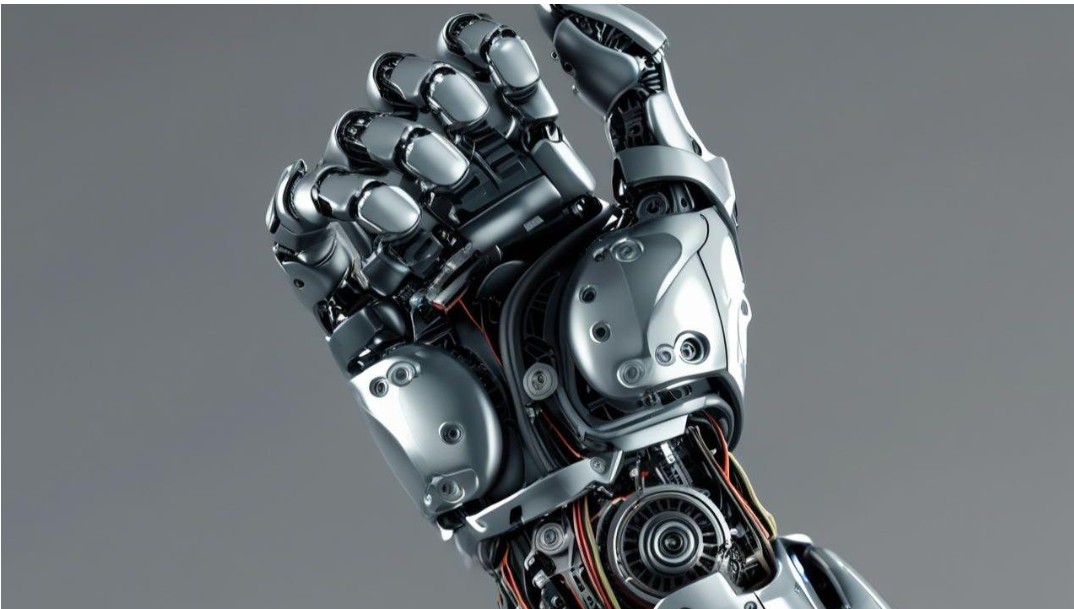
The humanoid robots are one of the highest advancements in contemporary robotics. These machines are designed to imitate human motion and interaction. The construction must include special components that provide high precision, strength, and flexibility. Of such components, motors are important in managing all the joints and steps of the robot. Although typical electric motors are found in industrial machines, household appliances, and cars, humanoid robot motors are designed with very different concerns. Humanoid robots have to walk, balance, and pick up objects and conduct delicate tasks in a human-like coordination. It needs specially designed robotics motors to accomplish this level of performance. The Humanoid Robot Motor has several major differences compared to conventional electric motors.
Purpose and Application Design
The former is the initial significant distinction upon which the motors are built. General electric motors are usually constructed to supply continuous rotation on machines like pumps, fans, or conveyor systems. They have the main purpose of keeping a constant speed and providing a consistent mechanical production over a long duration.
Humanoid robot motors, conversely, are designed to imitate the movement of human joints. These motors do not just spin at a fixed rate, but have to spin up and down, reverse directions, and vary the torque in real time. This enables the robotic joints to carry out tasks like bending an arm, lifting a leg, or rotating a wrist with accuracy.
High Torque Density
Torque density is another significant difference. Humanoid robots have to have motors with the ability to generate high torques, yet still compact and light in weight. Denser torque means that a motor can produce strong movement, but not grow in size.
Common electric motors are larger and heavier, as they favor longevity and constant running over small power generation. Humanoid robot motors, on the other hand, have been designed to provide high levels of torque compared to size, and thus can be installed in robotic joints.
Integrated Actuator Systems
Integrated actuator systems commonly include humanoid robot motors. The motor and gearbox, sensors, and electronic driver are all incorporated into one small unit called an actuator. This coordination enhances the functionality and mechanical design of robots, making it easier.
Normal electric motors are normally independent parts that must be supplemented by other external controllers, gears, and sensors to be utilized in a machine. The motors of humanoid robots are made more efficient by incorporating these elements directly into the actuator, making them less complex.
Precision Position Control
Humanoid robots need to have precision control. The motors installed in robotic joints should have the capacity to move precisely in order to reproduce human movements. As an example, to enable a robot to collect a small object, it is necessary to control the wrist and finger joints.
Normal electric motors are normally made to rotate instead of positioning. They may be used with control systems, although they are not necessarily constructed to provide the degree of positional precision needed in humanoid robotics.
Advanced Feedback Systems
Humanoid robot motors are based on advanced feedback systems like encoders that measure their position, speed, and torque. These sensors bring real-time information, which gives the control system of the robot the ability to modify the motor action in real time.
This feedback mechanism plays a very important role in balancing and coordinating complex movements. As an example, the motors of a humanoid robot should constantly change in order to keep balance when walking. Normal electric motors tend to work with limited feedback devices since they do not need them in their applications due to the opportunity to make such dynamic corrections.
Multiple Control Modes
Motors of humanoid robots are made to accommodate various control modes. These can be servo control to control the position accurately and force control to control the interaction with an object or surface.
Normal electric motors tend to be used in one mode, which is either speed-oriented or power-oriented. They are not normally intended to alternate between complicated control strategies needed by robotics.
Lightweight Construction
The aspect of weight is an important consideration when designing a humanoid robot. A robot having heavy motors would not be able to balance or move effectively. This is why robotic motors are constructed using lightweight materials and small body sizes.
In the majority of cases, standard electric motors are developed to emphasize cost efficiency and durability, and not weight reduction. Consequently, they are capable of being much heavier than motors that are specifically developed to operate in robotics.
Built-In Communication Interfaces
The other difference is that there are sophisticated communication systems. Humanoid robot motors frequently have communication interfaces by means of which they can directly communicate with the robot control system. These interfaces facilitate the accurate coordination of various motors in the body of the robot.
Typical electric motors on the market do not use advanced communication features and often make use of simple power input. They do not normally need elaborate coordination with other motors.
Stability and Resistance to Shock
Robots that look human live in dynamic conditions, whereby the motors can get unexpected loads or shocks. As an example, when a robot is jumping or landing after a step, the motors in its legs are forced to absorb large forces.
To cope with these stresses, robotic motors are constructed with durable parts using special bearings that can withstand multiple impacts. Even off-the-shelf electric motors may be incapable of withstanding the same kind of mechanical stress that is experienced in humanoid robotics.
Intelligent Motion Control
Combined with complex algorithms and smart controls, humanoid robot motors are frequently used. Through these systems, the robots are able to make smooth and coordinated movements that look like human behavior.
Electric motors. Standard electric motors often use fairly simple control mechanisms. They are geared towards mechanical tasks that can be predicted as opposed to elaborate motion planning.
Conclusion
The motor of humanoid robots is different in comparison to the motor of conventional electric motors, owing to the special needs of humanoid motors in movement and interaction. These motors are appropriate in complex robots due to the features of high torque density, built-in actuator design, fine feedback control, lightness, and advanced control modes.
With the further development of humanoid robots, the need for specialized motor technology will expand. Firms like CubeMars are contributing towards innovation in this area by coming up with motors that are specifically designed to suit robotic setups. Such sophisticated motors help humanoid robots to execute successful tasks more effectively, precisely, and reliably, and bring the robotics technology closer to real human interaction.