Last Updated on March 11, 2026 by Sky Bloom IT
In recent years, conversations around sustainability have moved from niche environmental circles into everyday life. More households across the UK are reconsidering the materials they use daily, from the products in their kitchens to the items in their bathrooms. As awareness grows about deforestation, waste and climate change, people are looking for alternatives that reduce their environmental impact without compromising comfort or practicality.
One material that has steadily gained attention is bamboo. Known for its remarkable growth rate and versatility, bamboo is now used in a wide range of everyday products. From household paper goods to furniture and textiles, this natural resource is increasingly viewed as a smarter alternative to conventional materials.
Understanding the Environmental Benefits of Choosing Bamboo Over Traditional Materials helps explain why bamboo is becoming such an important part of modern sustainable living. Its natural properties, renewable nature and minimal environmental footprint make it a strong candidate for replacing many traditional resources that have long dominated global production.
A Fast Growing and Renewable Resource
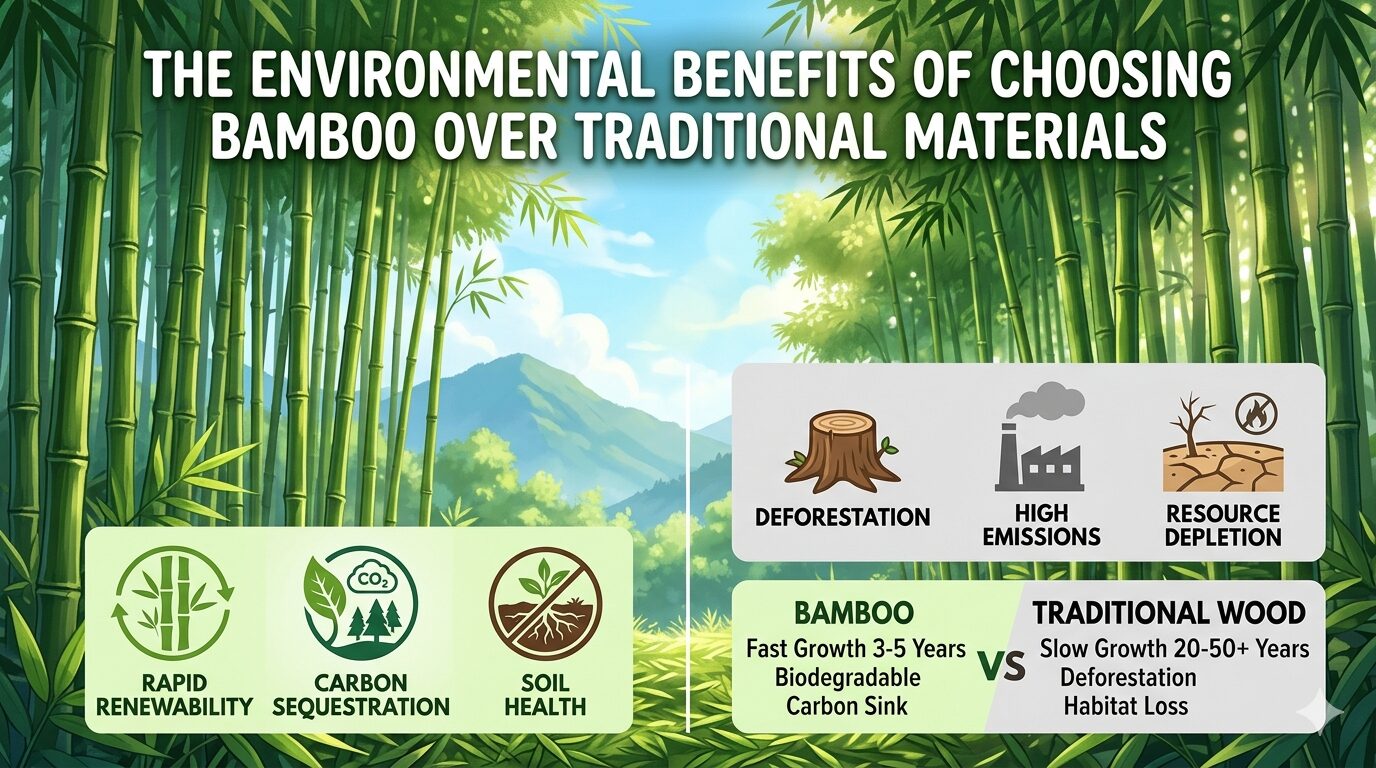
One of the most significant environmental advantages of bamboo is its extraordinary growth rate. Unlike hardwood trees that may take decades to mature, bamboo can grow to full size in just three to five years. Some species are even capable of growing several feet in a single day under the right conditions.
This rapid growth means bamboo can be harvested much more frequently than traditional timber without exhausting natural resources. After harvesting, bamboo regenerates from its existing root system rather than needing to be replanted. This natural regrowth reduces labour, soil disruption and energy use associated with large scale reforestation efforts.
Because of this regenerative cycle, bamboo plantations can produce far more usable material per acre than many traditional forests. This efficiency plays an important role in reducing the pressure on natural woodlands, which are often cleared to meet global demand for paper and wood based products.
The Environmental Benefits of Choosing Bamboo Over Traditional Materials begin with this fundamental advantage. A renewable material that grows quickly and regenerates naturally provides a strong foundation for more sustainable production systems.
Reducing Pressure on Forests
Deforestation remains one of the most pressing environmental issues worldwide. Vast areas of forest are cleared every year to supply wood for construction, paper production and other industries. This loss of forests not only reduces biodiversity but also weakens the planet’s ability to absorb carbon dioxide.
Bamboo offers an alternative that can help reduce this pressure. Because it grows so quickly and can be harvested repeatedly from the same plant, bamboo farms can produce significant amounts of raw material without requiring the clearing of large forest areas.
When bamboo is used to manufacture household products such as bamboo toilet rolls, it helps limit the demand for traditional wood pulp. This shift may appear small at an individual level, but when adopted on a larger scale it can contribute to reducing reliance on slow growing trees.
Protecting forests is vital for maintaining wildlife habitats and preserving ecosystems that support countless species. Choosing products made from renewable plant sources can play a meaningful role in this broader environmental effort.
Lower Water Requirements
Another environmental advantage of bamboo lies in its relatively low water requirements. Many traditional crops used in manufacturing, including cotton and certain types of timber, require substantial irrigation to grow successfully.
Bamboo, however, often thrives with natural rainfall alone. In many regions where bamboo is cultivated, additional irrigation is minimal or unnecessary. This reduces strain on local water supplies and lowers the environmental cost of cultivation.
Water conservation is becoming increasingly important as climate patterns shift and water scarcity affects more communities worldwide. Materials that require less water during their growth cycle help reduce the overall environmental burden associated with large scale production.
This characteristic further supports the Environmental Benefits of Choosing Bamboo Over Traditional Materials, especially when compared with crops that demand intensive irrigation and resource management.
A Natural Tool for Carbon Absorption
Plants play a vital role in absorbing carbon dioxide from the atmosphere, helping regulate the planet’s climate. Bamboo is particularly effective at this process because of its fast growth and dense root structure.
During its growth cycle, bamboo absorbs significant amounts of carbon dioxide while releasing oxygen back into the atmosphere. Studies have shown that bamboo forests can capture carbon at impressive rates, making them valuable in efforts to mitigate climate change.
In addition to absorbing carbon, bamboo plantations help stabilise soil and prevent erosion. Their strong root networks hold soil in place, particularly in regions prone to heavy rainfall or land degradation.
These ecological benefits extend beyond the products themselves. When materials come from plants that actively contribute to carbon capture and soil health, the environmental value increases throughout the entire lifecycle.
Reduced Chemical Use in Cultivation
Conventional agricultural systems often rely heavily on pesticides, herbicides and chemical fertilisers to maintain crop productivity. These chemicals can contaminate soil and waterways, harming wildlife and surrounding ecosystems.
Bamboo, by contrast, tends to be naturally resilient. Many species grow successfully without extensive chemical treatments because they are naturally resistant to pests and diseases. This resilience reduces the need for synthetic agricultural inputs.
Lower chemical use means less pollution entering the environment during cultivation. It also helps maintain healthier soil ecosystems, supporting microorganisms that contribute to long term soil fertility.
When bamboo is used to produce items like bamboo kitchen rolls, the reduced reliance on chemicals during growth can make a meaningful difference in the overall environmental footprint of the product.
Efficient Use of Land
Land availability is another major concern in sustainable resource management. As populations grow and demand for raw materials increases, efficient land use becomes increasingly important.
Bamboo plantations are highly productive compared with many traditional crops. Because the plants grow densely and regenerate rapidly, they can produce large volumes of material on relatively small areas of land.
This efficiency helps reduce the need to convert additional natural landscapes into agricultural or industrial sites. Protecting these landscapes supports biodiversity and helps maintain natural ecosystems.
The Environmental Benefits of Choosing Bamboo Over Traditional Materials are closely linked to this efficient land use. When materials yield more output from the same space, the overall environmental impact of production can be significantly reduced.
Biodegradability and Waste Reduction
Waste management is another growing challenge in modern society. Many products made from synthetic materials remain in landfills for decades or even centuries. This long term persistence contributes to pollution and environmental degradation.
Bamboo based products, however, are generally biodegradable. When disposed of properly, they break down naturally over time without releasing harmful substances into the environment.
This biodegradability is particularly valuable in everyday household products that are used frequently and discarded quickly. For instance, replacing conventional paper products with alternatives made from renewable plant fibres can help reduce long term waste accumulation.
Products such as bamboo tissue demonstrate how everyday items can be redesigned with sustainability in mind. By choosing materials that return to the earth naturally, households can play a small but important role in reducing environmental waste.
Supporting a More Sustainable Supply Chain
Environmental responsibility extends beyond the raw materials themselves. It also involves the processes used to manufacture, transport and distribute products.
Bamboo has the potential to support more sustainable supply chains because it grows quickly and can be cultivated in many regions around the world. Shorter growth cycles allow producers to maintain steady production without depleting natural resources.
Additionally, bamboo’s strength and flexibility make it suitable for a wide range of applications. This versatility allows manufacturers to develop alternatives to traditional materials in numerous industries, from construction to household goods.
By integrating renewable materials into supply chains, companies can gradually reduce their dependence on resource intensive production methods. Over time, this shift contributes to broader environmental improvements across multiple sectors.
Encouraging Conscious Consumer Choices
Sustainability often begins with awareness. As people learn more about the impact of everyday products, they become more interested in alternatives that align with their environmental values.
The growing popularity of bamboo based products reflects this change in consumer behaviour. Shoppers are increasingly considering not only how well a product performs but also how it is produced and what impact it has on the environment.
Understanding the Environmental Benefits of Choosing Bamboo Over Traditional Materials can empower consumers to make more informed decisions. Even small changes in purchasing habits can contribute to larger environmental improvements when adopted by many people.
When households choose products made from renewable resources, they send a clear signal to manufacturers that sustainability matters. This demand encourages companies to continue developing environmentally responsible alternatives.
Looking Towards a Greener Future
The shift towards sustainable materials is not about abandoning modern conveniences. Instead, it focuses on finding smarter ways to produce and consume the items we rely on every day.
Bamboo represents one of the most promising natural resources in this transition. Its rapid growth, minimal resource requirements and wide range of uses make it a practical option for replacing many traditional materials.
While no single solution can solve every environmental challenge, incorporating renewable materials into everyday products is an important step forward. By understanding the Environmental Benefits of Choosing Bamboo Over Traditional Materials, individuals and businesses alike can contribute to a more responsible and balanced approach to resource use.